Programs


Programs




Complete the interest form, and an Admissions Representative will reach out to help you learn more about the Cardiac Sonography Associate of Applied Science program and your next steps.
"*" indicates required fields
HDMC’s Cardiac Sonography Associate of Applied Science program is offered in a hybrid format, combining online theory with hands-on training in on-campus labs, online General Education coursework and real-world experience through a clinical externship.
Program Length
Program Details
General Education and introductory courses are primarily completed online. Core Cardiac Sonography theory is completed online, while hands-on labs are held on campus.
High Desert Medical College offers its Cardiac Sonography AAS program at its Bakersfield, Lancaster, and Temecula, California campuses. Students’ complete hybrid classroom instruction along with hands-on training at their selected HDMC campus.
The Cardiac Sonography AAS curriculum combines ultrasound technology, cardiac anatomy and patient care with hands-on scanning and General Education coursework.
Coursework and training include:
Students learn how ultrasound technology is used to examine the heart and related blood vessels while developing the technical and patient care skills needed to perform cardiac imaging procedures.
No prior sonography or healthcare experience is required to begin the Cardiac Sonography AAS program.
Applicants must meet HDMC’s admissions requirements, including having a high school diploma or recognized equivalent. Additional entrance testing may be required; see the school catalog for current admissions requirements.
An Admissions Representative can review the requirements with you and help determine your next steps.
For the most current Cardiac Sonography AAS tuition and fee information, refer to the HDMC School Catalog or speak with an Admissions Representative.
Financial aid, grants, scholarships, and student loans may be available to those who qualify. HDMC’s Financial Aid team can help you understand available options and determine what you may be eligible for.
High Desert Medical College is institutionally accredited by the Accrediting Council for Continuing Education & Training (ACCET).
HDMC is also approved to operate by the California Bureau for Private Postsecondary Education (BPPE).


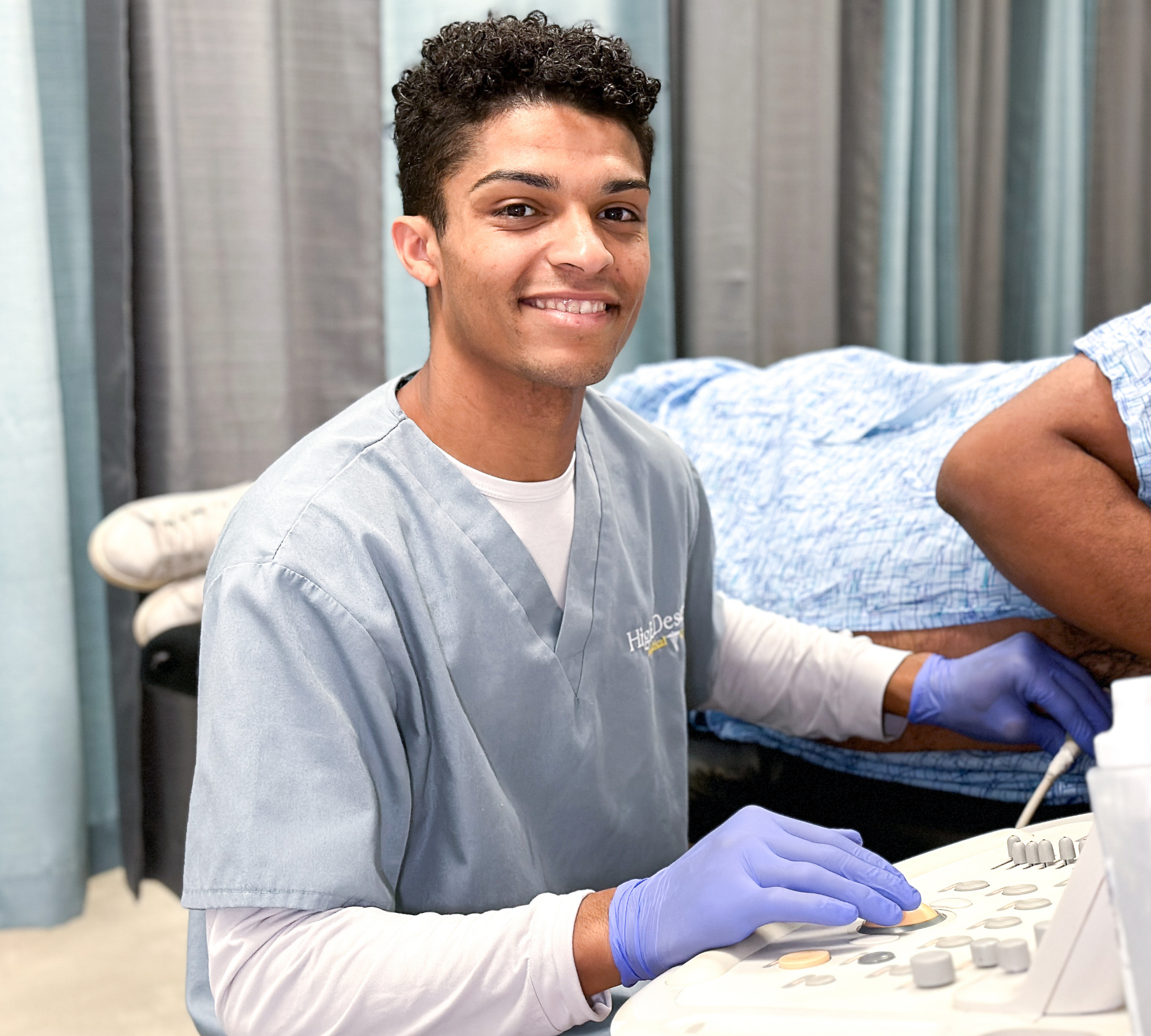
HDMC’s Cardiac Sonography AAS program combines ultrasound theory with hands-on training to help you develop the technical and patient care skills used in cardiac imaging.



This fun, online quiz takes just 3 minutes to complete and will give you a personalized report. Identify your strengths and social style, plus the training and positions you’re best suited for.

HDMC supports students beyond the classroom with career-focused guidance, professional development resources, and personalized support designed to help graduates feel confident entering the healthcare field.




Earn your degree and build cardiac imaging skills.

Graduate with an Associate of Applied Science degree in Cardiac Sonography from HDMC.
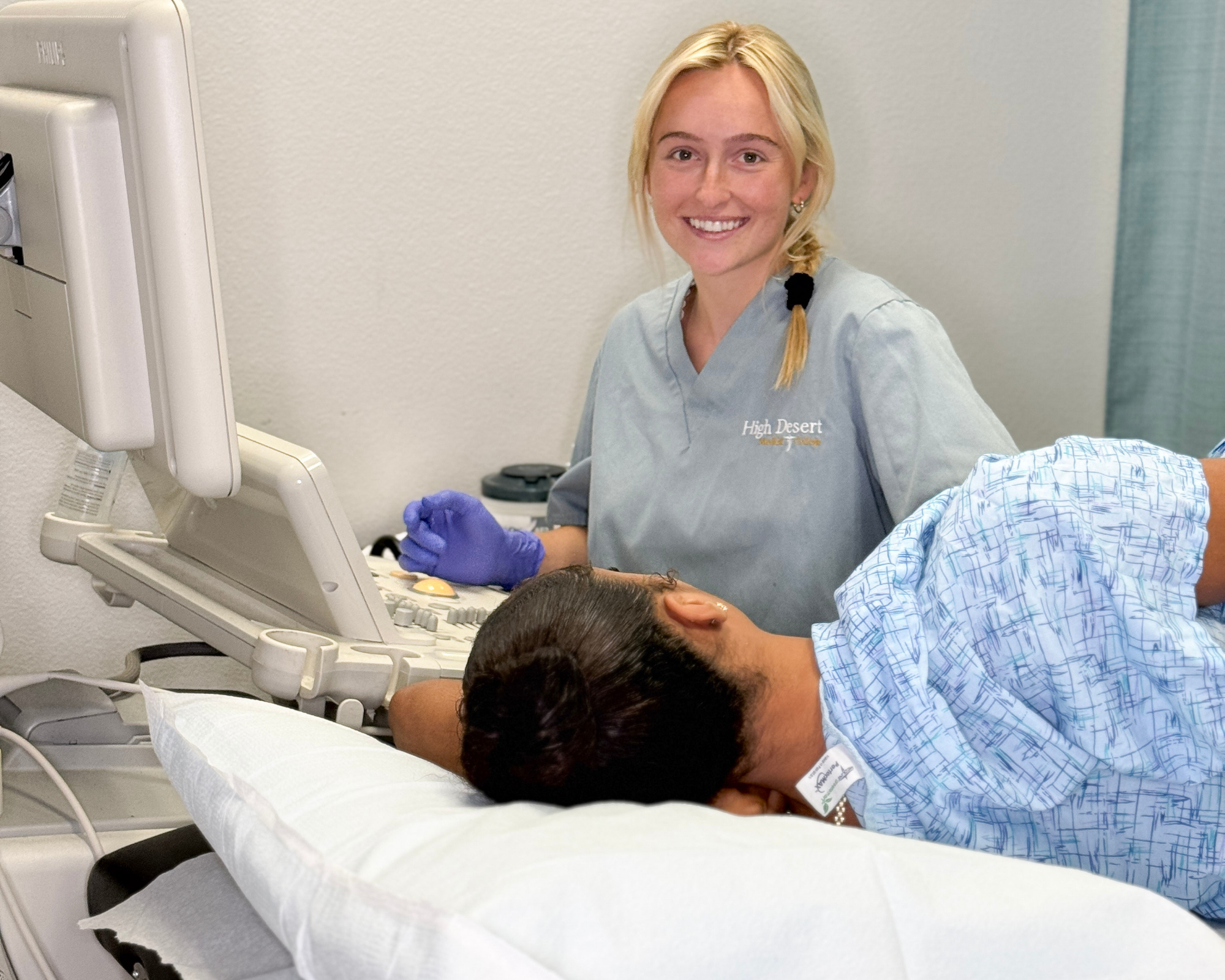
Build practical cardiac imaging skills through on-campus labs, ultrasound equipment and SonoSim technology.

Complete a 900-hour clinical externship where you can apply your cardiac sonography knowledge and scanning skills in a professional healthcare environment.

Cardiac Sonographers work across a variety of healthcare and imaging settings. Picture yourself working in:

Support hospital cardiac imaging

Perform diagnostic cardiac imaging

Provide in-office cardiac imaging
Support outpatient cardiac care
Provide imaging across locations

Support cardiac diagnostic services
A Cardiac Sonography AAS degree could lead to jobs with titles like:
Cardiac Sonographer
Diagnostic Medical Sonographer
Medical Sonographer
Sonographer
Staff Sonographer
Ultrasonographer
Ultrasound Technician
Ultrasound Technologist
A Cardiac Sonography AAS degree could lead to jobs with titles like:
Cardiac Sonographer
Diagnostic Medical Sonographer
Medical Sonographer
Sonographer
Staff Sonographer
Ultrasonographer
Ultrasound Technician
Ultrasound Technologist



“I chose the cardiac sonography program at HDMC because of my family’s history of cardiac diseases. It inspired me to pursue a career in the medical field, specifically focusing on aiding patients with heart conditions. I chose HDMC because of its reputation and location.”
Here are a few things everyone asks. If you don’t see your question, reach out to see whether our Cardiac Sonography AAS program is right for you.
Cardiac Sonographers use ultrasound equipment to create images of the heart and related blood vessels. They may examine the heart’s chambers, walls and valves, evaluate image quality, record findings and work with physicians who use those images to help diagnose and monitor cardiac conditions.
HDMC’s Cardiac Sonography AAS program can be completed in as few as 115 weeks with either the morning/afternoon or evening schedule. The program includes 2,400 total clock hours and 107 semester credits, including a 900-hour clinical externship.
The program is offered in a hybrid format. General Education and introductory coursework are primarily completed online. Core Cardiac Sonography theory is also completed online, while hands-on labs are held on campus. Students also complete an in-person clinical externship.
No prior healthcare or sonography experience is required. The program is designed to teach students the foundational medical knowledge, ultrasound theory, cardiac imaging techniques and hands-on skills needed to prepare for entry-level opportunities.
Financial aid, grants, scholarships and student loans may be available to those who qualify. HDMC’s Financial Aid team can help you review available options and determine what you may be eligible for.
to help you build confidence before entering the workforce